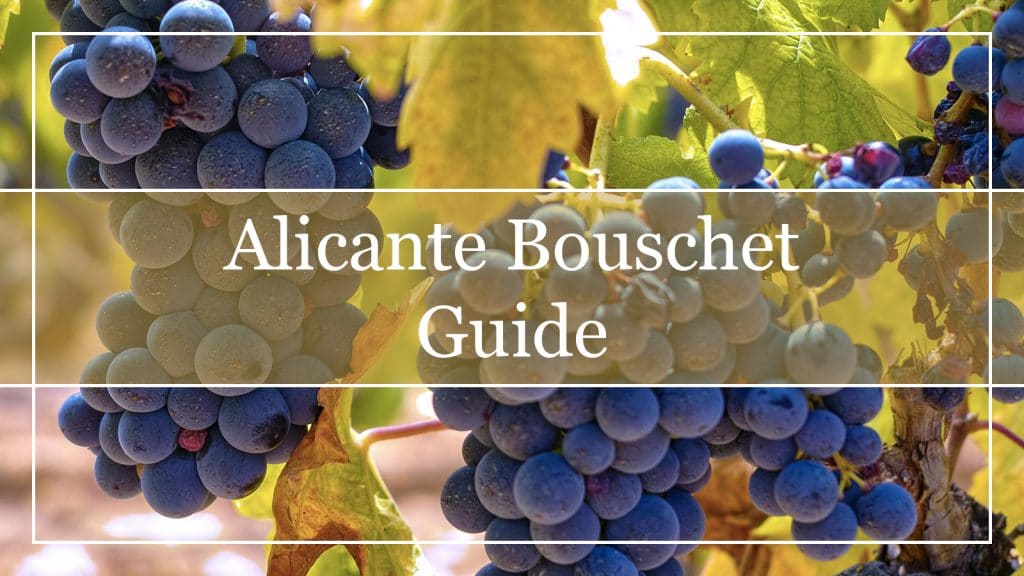
What Is Alicante Bouschet?
Alicante Bouschet is a red wine which is also called Garnacha Tintorera in Spain. Born from a cross between Petit Bouschet and Grenache in the late 19th Century in the South of France by Henri Bouschet. One of the most unusual of Alicante Bouschet characteristics is the color of the fruit. While the vast majority of grapes have white fruit, this wine has red fruit and consequently, the juice from Alicante Bouschet is red. The wine has adopted the Alentejo region of Portugal as its home.
What Color Is Alicante Bouschet?
Alicante Bouschet color is derived from anthocyanin pigments being distributed not only in the skins but throughout the flesh of the grape. Alicante Bouschet is a member of the ‘teinturier’ grape variety, and the name is derived from the French verb, ‘to dye or to stain.’ Drinkers of this wine can recognize each other by the charming purple hue on their teeth and tongues!
Originally Alicante Bouschet was grown to add color to a range of other red wines particularly to Aramon wines which were one of Frances most widely grown cultivars during the nineteenth century. It has subsequently developed into a wine of choice in Portugal and Spain displaying rich flavors of blackberry and spice.
What Does Alicante Bouschet Mean?
The name Alicante Bouschet is derived from the surnames of the creators of the wine, father and son, Louis and Henri Bouschet. The Alicante part is because Grenache is referred to as Alicante in the South of France.
The name is quite confusing though, because Alicante is also the capital city of the Alicante province in Spain with which it has no connection.
If you have worked all that out it’s probably a good time to savor a small glass of Alicante Bouschet.
How to Pronounce Alicante Bouschet?
English language speakers have difficulty in getting their tongues around the silent consonant in French. It is almost as if the French have devised a cunning list of consonants that sometimes are heard and at other times are swallowed in silence. The famous ‘t’ is silent in petit but not in ‘brut’ and so in ‘Bouschet’ the ‘t’ has once again hidden itself in silence at the end of the word.
Alicante is pronounced pretty much as you read it with a slight accent on the last syllable ‘te’ and then if you swap the ‘q’ sound in bouquet for an ‘s’ you will approach the correct Alicante Bouschet pronunciation.
And if you are really stuck try saying: alli kan tay boo shay. Got to love the French ability to make complexity out of the dead simple.
Where Does Alicante Bouschet Come From?
The wine was originally developed by Henri Bouschet in the late 19th Century. The grape is derived from Petit Bouschet and Grenache. Grenache is known as Alicante in the South of France. The grape became exceedingly popular in France after the ‘Phylloxera’ blight in the mid. 19th century because of the large yields and easy growing characteristics.
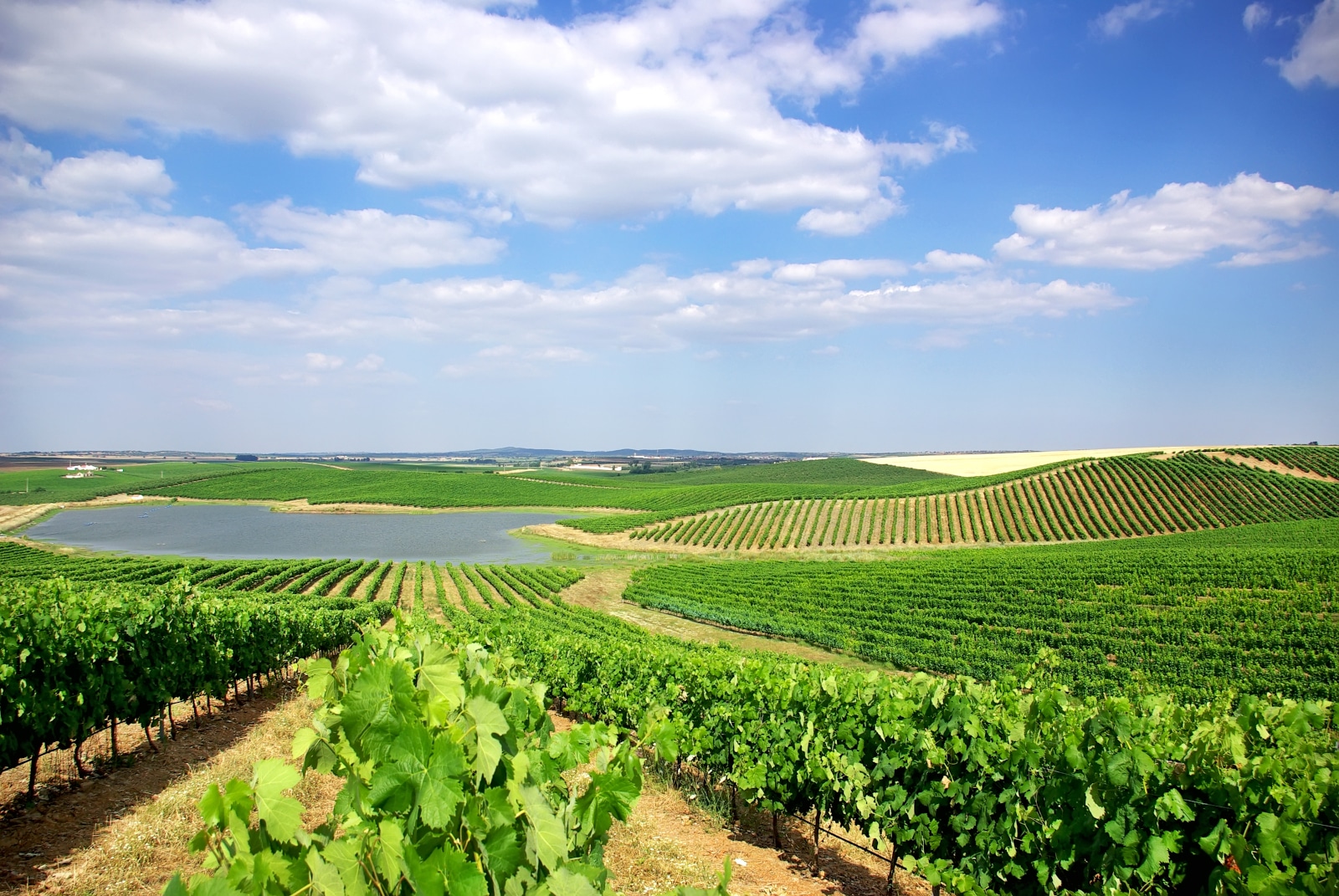
The grape thrives in dryer areas and in the Alentejo region of Portugal it has become the most significant wine in the area. In this region, once a part of the Roman Empire called Lusitano, they still use clay pots called ‘talhas de barro’ for fermenting the wine.
Historically the Alentejo region was home to Roman winemakers with their enormous clay pots that served the same purpose as barrels do today. Alongside the use of the ‘talhas’ (clay pot) the grapes were pressed by feet on the floor of the winery which had specially sloped floors that encouraged the ‘must to drain to the center into a buried ‘talha’.
There is a strong movement to preserve the historical methods of winemaking but modern additives such as sulfur dioxide have been introduced to combat bacteria and remove the weaker yeast strains.
The wine is known as ‘Tinta de Escrever’ in this region and it is also extremely popular in Spain where it has a trio of names, ‘Garnacha, Tintorera, and Negral.
In California, in the warm central valley about one thousand acres of Alicante Bouschet is grown and because of the wine’s affinity for warmer climates, there are also producers in North Africa as well as Chile.
What Kind of Wine Is Alicante Bouschet?
Alicante Bouschet is a wine that reflects the local climate. In warmer areas, it becomes a ready-to-drink mellow easy-drinking wine while in the cooler areas the acidity increases and sharpens the wine. While it is commonly used as a source of color and tannin in blending with other cultivars but In Spain and Portugal, the wine is highly prized as a solo artist.
In Portugal, the wine is characterized by a powerful smoky body while the Garnacha Tintorera of Spain lends a fruitier warmth to the wine. In the homeland of Languedoc-Roussillon, the wine is primarily used as a blend.
Alicante Bouschet did achieve a significant degree of popularity in the USA during prohibition when it was marketed to circumvent the prohibition laws. Sadly, this did result in the wine gaining a rather cheap reputation.
Is Alicante Bouschet Dry or Sweet?
Alicante Bouschet resonates with the area it grows in and so it has a smoky sweetness about it. It has a high alcohol content of around fifteen percent, but this is well balanced with strong fruitfulness.
The relatively high alcohol content would tend to nudge the wine to the dry side, but the terroir plays such a significant role in the balance of fruit to alcohol. The bold fruit flavors of blackberries and ripe plums do introduce an element of sweetness.
What Does Alicante Bouschet Taste Like?
Alicante Bouschet tasting notes do not include the facial expressions of guests when taking their first sip of the tremendously bold, fruit-forward, dark red, wine. The general expression is that of intense surprise as the fullness of the wine creates a delighted dance on the taste buds.
The wine is often described as firm with extensive structure and has a rather euphemistic term of ‘rustic’ tannins. In fairness though this description is limited to the young wines from the cooler climates and these tannins are softened with age.
Alicante Bouschet aroma ranges from forest berries, ripe plums through a delicate range of spices with peppery undertones to a hint of cocoa and olives. Alicante Bouschet’s flavor profile is just as broad as its range of aromas. This is especially true when the wine has been aged in wood which acts as a catalyst to conjure up hints of vanilla bean, dark chocolate, and spice.
Overall, the taste of Alicante Bouschet is a Flamenco like dance of vibrant and intense color, bounteous fruit, and subtle spice.
How to Serve Alicante Bouschet?
There is a range that covers the temperature to serve Alicante Bouschet at, but it is not that simple. Firstly, younger wines should be served a little cooler, particularly if they have not had much time in the barrel, so we start at around fifty-four to fifty-seven degrees Fahrenheit.
As the wines get older and with more time in the barrel the correct serving temperature drifts towards the same temperature as the cellar itself. Creeping a little higher to round sixty-three to sixty-five degrees Fahrenheit.
Choose a glass with a broad base and an opening that will allow a fair amount of oxygen to caress the wine and gently swirl away the ethanol to enhance the smoothness of the wine.
How Long Should Alicante Bouschet Breathe?
Don’t be misled by believing that opening a bottle of wine to let it breathe is going to do too much to the wine. The exceedingly small section of wine that will be exposed to the air will not make a difference and it is far better to properly aerate the wine. You will do far more by swirling the wine around in your glass than leaving the wine to breathe in an opened bottle.
As a general guide the more tannins in the wine the longer it should be allowed to breathe. Remember that the acidity and tannins depend on the origin of the wine, so wines from a cooler climate will require a slightly longer interaction with the air.
What Food to Pair With Alicante Bouschet?
The punch of Alicante Bouschet needs to be met with an appropriately substantial partner. This is not the wine for fine and delicate food. Here we are looking at a steak of thick dimensions, succulent and well-seared porterhouse or rump will offer up the required support.
Another avenue to explore is to balance the acidity of the wine with a tomato-rich marinara sauce together with a healthy dose of capers and just a touch of heat from cayenne pepper or chilies. Take another step and try this wine with a warm puttanesca dish on a cold winters’ night. With this Alicante Bouschet food pairing, it will be a night to remember.
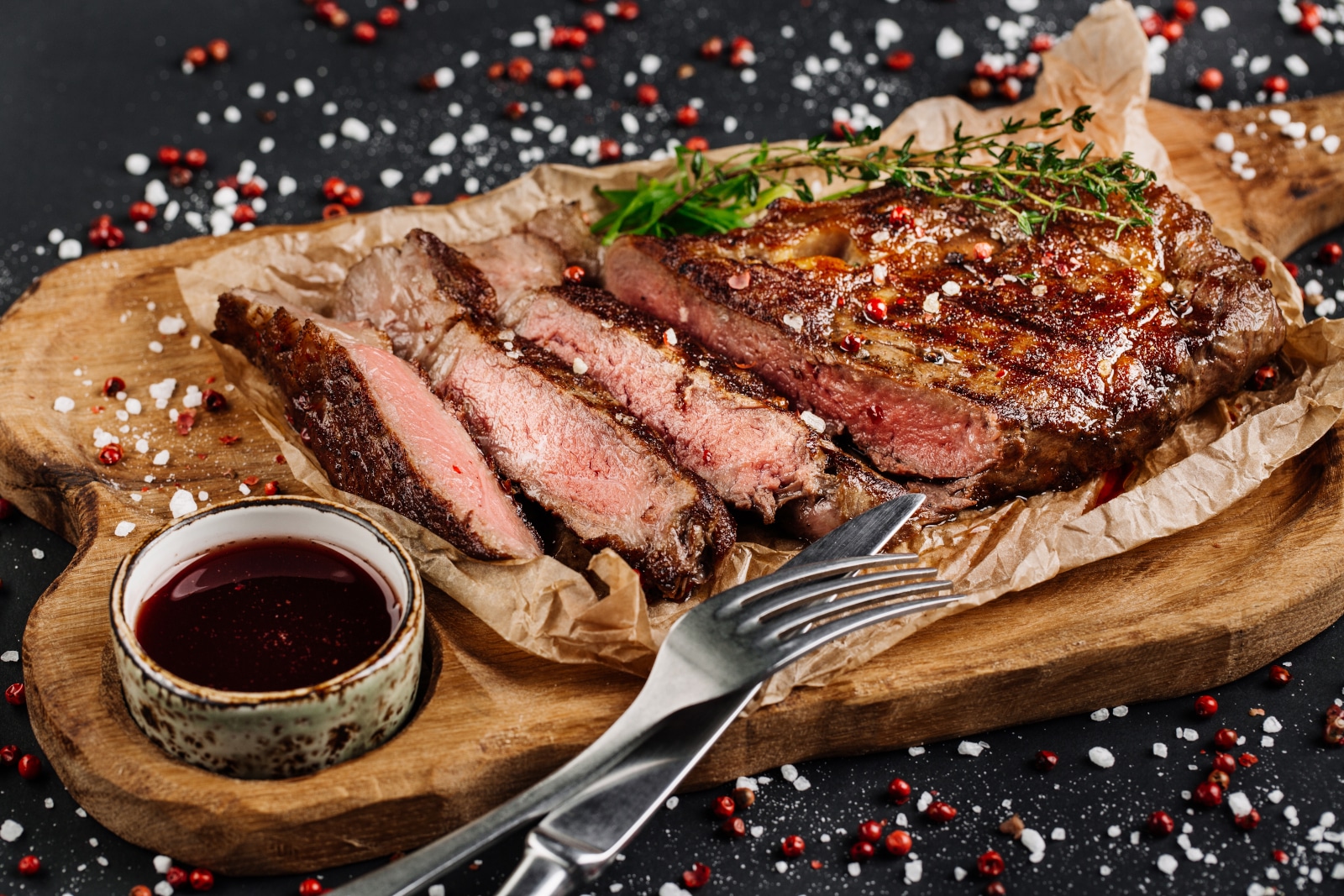
Other dishes that have the robustness to step up to the plate are barbecued ribs and smoked meats like pork tenderloins served with a smoked paprika touch.
Alicante Bouschet cheese pairing calls for hard cheeses, strong and well matured which are tantalizingly served with cured meats and just a smattering of ripe strawberries.
How Much Alcohol Does Alicante Bouschet Have?
Alicante Bouschet alcohol content varies depending on the personal preference of the winemaker but generally, it is known as wine of fairly high alcohol content starting off at thirteen percent and moving up to some bottles of over fourteen percent alcohol by volume.
How Many Calories Are There in Alicante Bouschet?
Typically, the carbs in Alicante Bouschet center around four grams per glass and between one hundred and twenty and one hundred and thirty calories per five-ounce serving.
The calories are almost all the product of the alcohol and less than ten percent is derived from the carbohydrates.
The carbohydrates are almost equally the product of the seed and skins at around two grams and the other two grams stem from the leftover grape sugars.
Conclusion
There is an element of romance about this wine. Growing up in the rough and tough world of prohibition and soaked in tubs across the country to circumvent maligned laws it has a certain romance about it.
It orbits proudly in the rather nefarious outer regions of popular wines – except for in Spain and Portugal where they have made it an essential element of their cuisine.
Alicante Bouschet has a reputation of being tough and resolute. It is a tribute to the winemaker who can reign-in this vigorous vine and make from it a wine of attractive fruit and body, well balanced with alcohol and tannins.