What Is Grenache Blanc?
Grenache Blanc or Garnacha Blanc is a medium-to-full-bodied white wine that originated in Northern Spain. It is the light-skinned mutation of Grenache Noir. Grenache Blanc is best known for growing in Southern France, where pronunciation a white blender. Also, it is a member of the renowned Châteauneuf-du-Pape blend.
As a light-golden, pale straw-colored wine, Grenache Blanc is produced mainly as a varietal wine, though, as mentioned above, it is widely used as a softener in blends, too. In the United States, for instance, single-varietal Grenache Blanc wines increase in popularity day-by-day. And it is also a component in sweet or fortified vins doux naturels of the Eastern Roussillon or Rhône Valley such as Rasteau, Maury, and Rivesaltes.
The Grenache Blanc characteristics are light and refreshing. Wines of this grape varietal display green and stone fruit aromas and broad texture. Apple and pear blend aromas with peach, apricot, and nectarine flavors to deliver a wine-drinking experience similar to a Pinot Grigio. It can even age in oak, producing intense tropical fruit flavors, high alcohol content, and a rich, plush style, similar to a barrel-fermented Chardonnay. Grenache Blanc is amazing to sip poolside or on a warm summer day.
What Color Is Grenache Blanc?
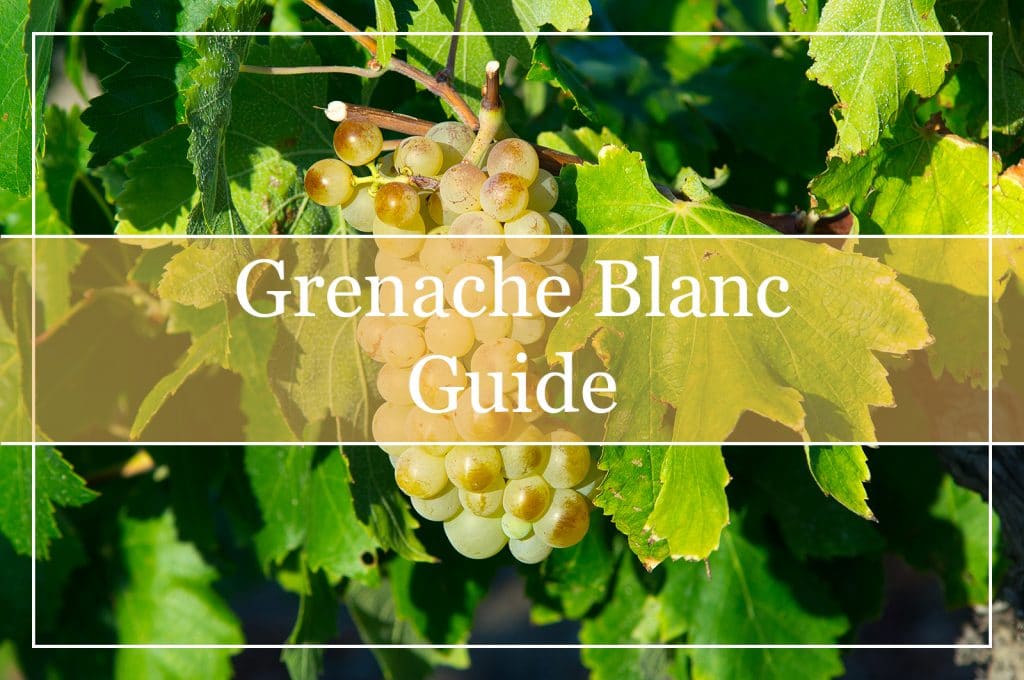
With Blanc meaning white in French, Grenache Blanc is a light-skinned yellowish-golden grape used to produce white wine. It is a grape from the Vitis vinifera family. Vitis vinifera is the standard Eurasian grape variety. It gives almost every grape used in modern winemaking and has been used to produce wine since… wine first existed.
Up until véraison and berry ripening, Grenache Blanc grapes are hard and thick to the touch. Véraison period, however, signals the point at which the grapes begin to ripen. At this point, the grape’s skin changes color, with Grenache Blanc color turning translucent and intensely golden, with a bright yellow reflection. What an attractive appearance!
Between véraison and harvest, grapes swell and fill with water. Throughout ripening, grape sugar levels rise, and the acid levels drop. Color pigments and flavor components accumulate. Warm and sunny conditions are ideal, while mild water stress inhibits soot growth, encouraging grape ripening. That is a splendid spectacle, seeing rows of golden-hued Grenache Blanc vines.
What Does Grenache Blanc Mean?
Grenache Blanc is comprised of two words: Grenache and Blanc. Grenache is a predominantly red grape variety. It is defined as a widely cultivated sweet red grape used in winemaking. Historically, Grenache is a French word, coming from the Catalan garnatxa or granatxa, type of grape. Garnatxa comes from the Italian vernaccia, from Vernaccia or Vernazza, a village in Liguria, Northwestern Italy.
Blanc means white in French and is used to distinguish Grenache Blanc as a white grape varietal from its cousin Grenache Noir, a red grape variety. Blanc derives from Middle French blanc, from Olde French blanc, from Late Latin, Vulgar Latin blancus, which in turn is a borrowing of Frankish blank, and so on.
How to Pronounce Grenache Blanc?
Grenache Blanc’s pronunciation is not difficult, even if you forgot to take French lessons at school. That said, it is important to know how to pronounce the grape, especially if you plan to attend wine tasting contests. You do not want to show any weakness or being judged negatively for your wine knowledge.
There are ample resources online, from audio to video examples, to help you learn the correct pronunciation of Grenache Blanc. Keep in mind that there are three syllables in the word, and the emphasis falls on the second and last syllables. Here is what it looks like phonetically:
gre-nache bla(n)k
Where Does Grenache Blanc Come From?
Grenache Blanc originated in Northern Spain, where it is called Garnacha Blanca. Most Garnacha Blanca vines grow in Catalonia, known as Garnatxa Blanca, and Aragón. It plays a significant role in Rioja and Navarre wines. There, it is part of regional wines in Priorat and Terra Alta.
But Grenache Blanc did not remain on Spanish soil. It spread to neighboring France, where it thrived in the vineyards of Rhône Valley and Châteauneuf-du-Pape. In Châteauneuf-du-Pape, Grenache Blanc is used to offsetting the honeyed plushness of Roussanne. Also, some Châteauneuf-du-Pape wines have almost fifteen-percent Grenache Blanc in their blend, which is impressive. On top of that, in Roussillon, Southern France is about a third of the country’s Grenache Blanc vineyards.
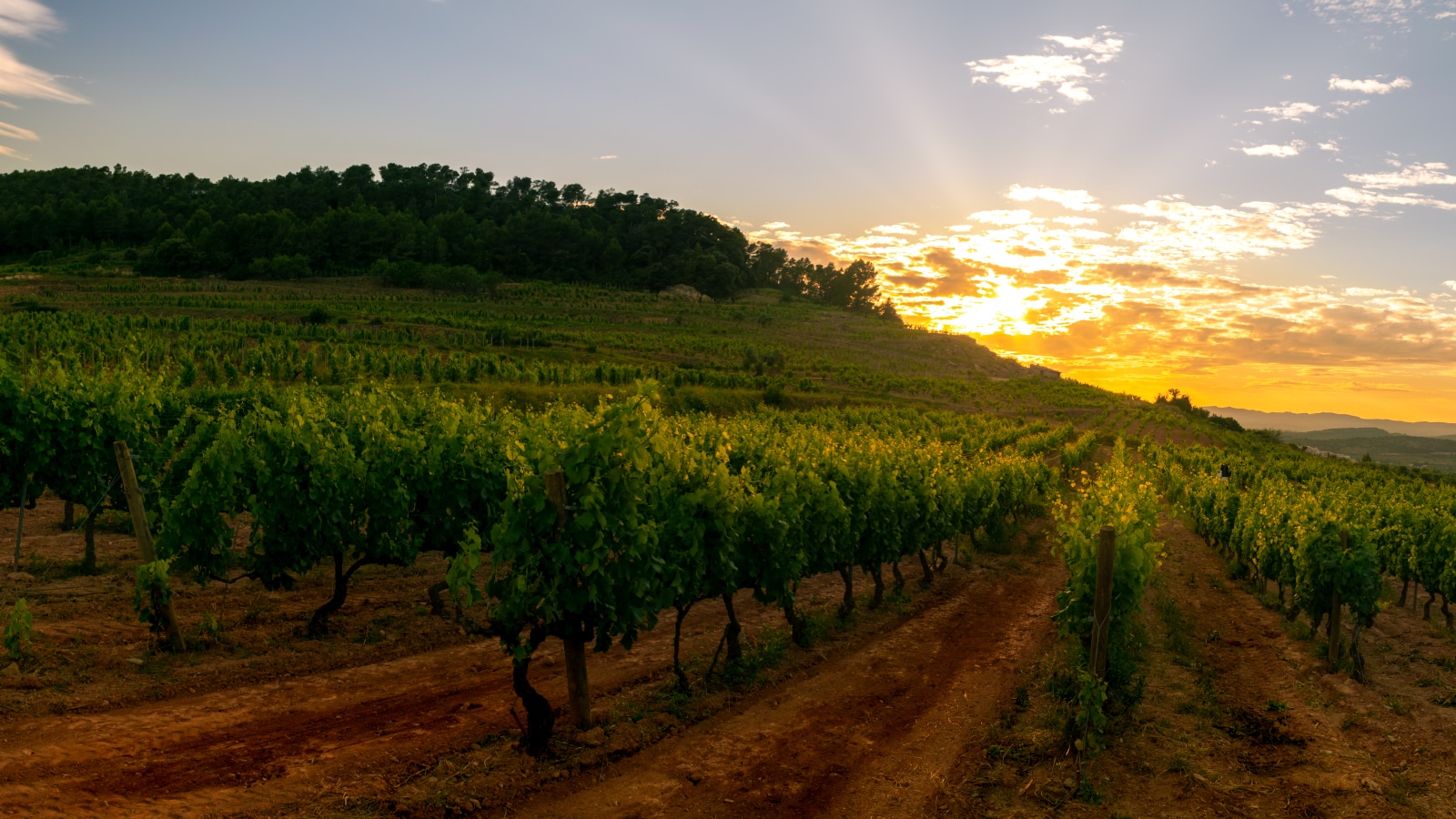
Châteauneuf-du-Pape is unique because it permits white grapes to be blended with red grapes—not a common practice in most winemaking regions of the world.
This grape is also widely cultivated in the United States, on the Central Coast in California, in San Luis Obispo. The cooling influences from the Atlantic Ocean moderate the hot temperatures of California and allow Grenache Blanc to develop crisp acids and mineral characteristics.
Grenache Blanc is thought to be a mutation of the dark-skinned Grenache Noir grape. The vines are drought-tolerant, manage irrigation well by trapping water, and fare excellently in dry and hot conditions, such as the Mediterranean climate of Spain, with long summers and sporadic rainfalls. Its tenacity, further, serves it well in windy regions. However, it is also sensitive to terror, so Grenache plantings show variation. In addition, extra care is needed to avoid acidification and oxidation.
What Kind of Wine Is Grenache Blanc?
Grenache Blanc is a full-bodied, dry white wine characterized by low-to-medium acidity, high alcohol, and notes of green and stone fruits, bright citrus, and a mineral finish. Grenache Blanc might also be oak-aged, showcasing flavors of charred wood and smoke. Even though Grenache Blanc is a plush wine, it is versatile and enjoyable on every occasion. Whether with family or friends, it can be sipped poolside, during a garden party, or next to the fireplace. It is destined to be appreciated by guests, especially if served slightly chilled.
As always, the appellation plays a crucial role in shaping the wine’s personality. Grenache Blanc has to receive as much sunlight as possible to increase its sugar concentration to produce its renowned rich flavors.
Is Grenache Blanc Dry or Sweet?
Grenache Blanc helps in the production of both dry and sweet wines. As mentioned above, Grenache Blanc is used as a blender varietal in dry white wines from Spain or in the Châteauneuf-du-Pape blend. In addition, it is also a significant component in sweet and fortified French wines such as vins doux naturels from Rasteau, Maury, and Rivesaltes of Eastern Roussillon and Rhône Valley.
What Does Grenache Blanc Taste Like?
Grenache Blanc tasting notes highlight the richness of flavors and crisp acids. For starters, the Grenache Blanc aroma is delightful and charming. It shows bright green apple and pear fragrances accompanied by citrus, mandarin orange, and white peach aromas.
In the mouth, flavors of peach and apricot blend with a touch of pineapple and mango. Hints of minerals uplift wine enthusiasts, too. The Grenache Blanc taste also is defined by herbs and spices such as dried dill, nutmeg, and cumin. If the wine has aged in oak, flavors of brioche bread, cream, charred wood, smoke, clove, and lemon curd may be developed, just like a barrel-fermented Chardonnay. And as to the wine’s acidity, it is usually medium but crisp, refreshing wine fans.
The Grenache Blanc flavor profile is mouthwatering, therefore. Plump and rich with juicy fruit flavors, dried green herb notes, and salty minerals touches, Grenache Blanc is complex with a full texture and higher than average alcohol levels. A sip of Grenache Blanc is all that you will ever need on a hot day. Perfect during a cruise of the Meditteranean.
How to Serve Grenache Blanc?
Serve Grenache Blanc in regular medium-sized white wine glasses or Chardonnay Montrachet glasses (the latter tend to be super expensive, however). The large surface of the glasses provides the wine with essential aeration. As the air comes into contact with the wine surface, the plush nature elevates.
Furthermore, the suggested temperature to serve Grenache Blanc is forty-five to fifty degrees Farhenheit (seven to ten Celsius). The reason for chilling it, apart from extra crispiness, is to reduce the burning feeling of the higher alcohol levels, resulting in a more friendly wine-drinking experience. Remember also that the crispiness of Grenache Blanc shows well at low temperatures, but not in every wine Grenache Blanc is a component. For example, white Rhône varieties show little flavor intensity when served cold.
Moreover, Grenache Blanc has to stay cool during service. To do that, use an ice bucket or wine cooler. The bucket should be filled three-quarters full with equal quantities of ice and water so that iced water surrounds the bottle. The water transfers the heat from the bottle to melt the ice. Air acts as an insulator, and the bottle chills.
By keeping the wine cool, its aromas, acidity, and flavors remain intact. That said, be careful and not serve it too cold either. Over-chill it, and you will end up muting its flavors, resulting in a thin and bland beverage.
Aging Potential
Regarding aging, Grenache Blanc is sensitive to oxidation and acidification, so be sure to store it in a cool place. If blended with other varieties, Grenache Blanc wines can age longer for a period of up to five years.
In case you decide to mature such a Grenache Blanc example, seal it with a cork and store it in an environment with room temperatures that do not fluctuate (fifty to sixty degrees Fahrenheit or ten to fifteen Celsius) and a portion of humidity.
Direct sunlight or artificial light should be kept at bay, as they may cause irreversible damage. Intense exposure to light rearranges the chemical compounds found in wine, like oxygen and temperature, and causes wine faults. That means that the wine ages prematurely, and its aromas, flavors, and even color change for the worse. The resulting wine is known as light-struck.
Odors also must be avoided, as they might find their way inside the bottle. If they do, they usually instill unwelcome aromas and flavors, like intense animal sweat or vinegar. However, do not let the wine mature over two years.
After extensive maturation, Grenache Blanc develops aromas and flavors of dried apricot, fig, prune, honey, ginger, petrol, and an intense nuttiness.
How Long Should Grenache Blanc Breathe?
Grenache Blanc is lightweight. It is full-bodied with medium acidity and an intense flavor profile. So, it will benefit from a bit of aeration. But you do not have to use a decanter. Grenache Blanc is sensitive to oxidation. Thus, you do not want it to breathe for far too long before serving it and enjoying it. A little aeration, however, will revitalize the wine’s flavorful character.
What Food to Pair with Grenache Blanc?
Grenache Blanc food pairing is easy. This grape varietal is a delicious partner for several rich dishes due to its pronounced green fruit aromas, plush stone fruit and spiced flavors, and structured body. Do not pair it with too spicy food, though, as the high alcohol will create an uncomfortable burning feeling.
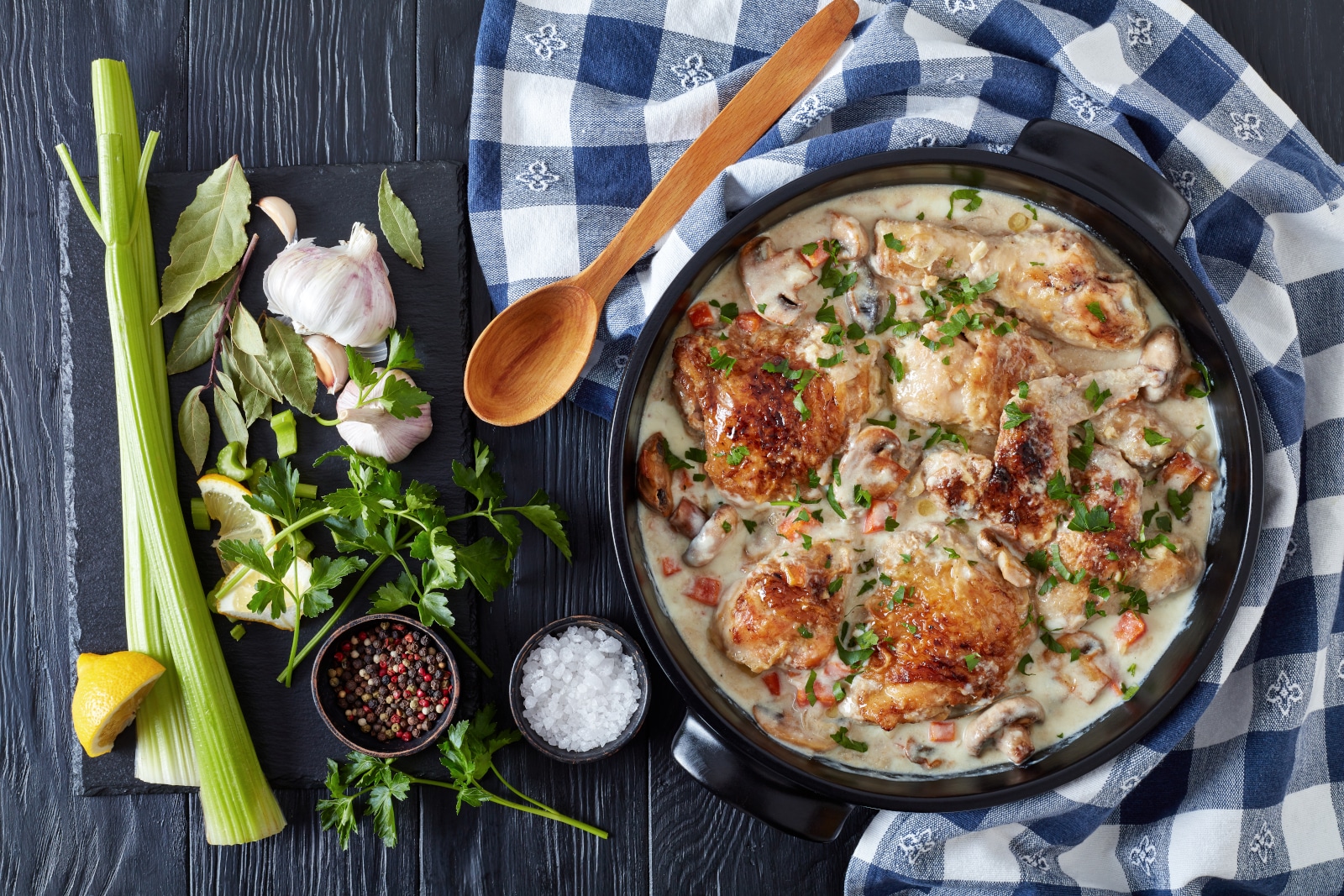
Relatively high on the flavor intensity spectrum, Grenache Blanc accompanies hearty meats like lamb, veal, or pork. Pair the wine with nearly everything from spiced New Zealand lamb to braised short rib to herb-crusted chicken or chicken fricassee. On top of that, Grenache Blanc is a fantastic companion to seafood courses, such as garlic-tossed shrimps, fish tacos, tempura shrimp, or broiled lobster. As a consequence, Grenache Blanc goes nicely with Moroccan, Spanish, Asian, or even Asian cuisine.
Grenache Blanc Cheese Pairing
This wine pairs amazingly with softer creamy cheeses, including Brie, Camembert, and Fromage Blanc. It is also fantastic with nutty medium-hard cheeses such as Emmentaler, Jarlsberg, Raclette, and Gruyère. For an ideal presentation, serve an assortment of these cheeses with cranberry dip. You can even cut some slices of Raclette, Brie, and Gruyère and combine them with cured meat in a sandwich with a salad Niçoise dressing. Delicious!
How Much Alcohol Does Grenache Blanc Have?
The Grenache Blanc alcohol content is in the range of 13 to 15% ABV. That is typical of structured dry whites. Before enjoying Grenache Blanc, do check the label on the bottle for added precision.
Furthermore, if this varietal is used as in sweet or fortified wines, the alcohol content ranges from 11% to 18% ABV or more.
How Many Calories Are There in Grenache Blanc?
Grenache Blanc shows an average calorie density. At this point, be aware that alcohol increases calories in wines. Fortunately, Grenache Blanc may have high alcohol levels, but it manages to keep calories low. The carbs in Grenache Blanc are in the range of 1 to 4 grams per glass. The calories are between 21 and 25 per serving.
Conclusion
Grenache Blanc is a versatile white grape variety, primarily used as a blending strengthener in blends. From Châteauneuf-du-Pape to prestigious French sweet and fortified wines, Grenache Blanc contributes body and plush fruit flavors. As a single-varietal wine, Grenache Blanc smells of green touches of apple and citrus notes. This grape is unpretentious, exciting, and delightful. It is a winemaker’s favorite when crafting bold and powerful wines.